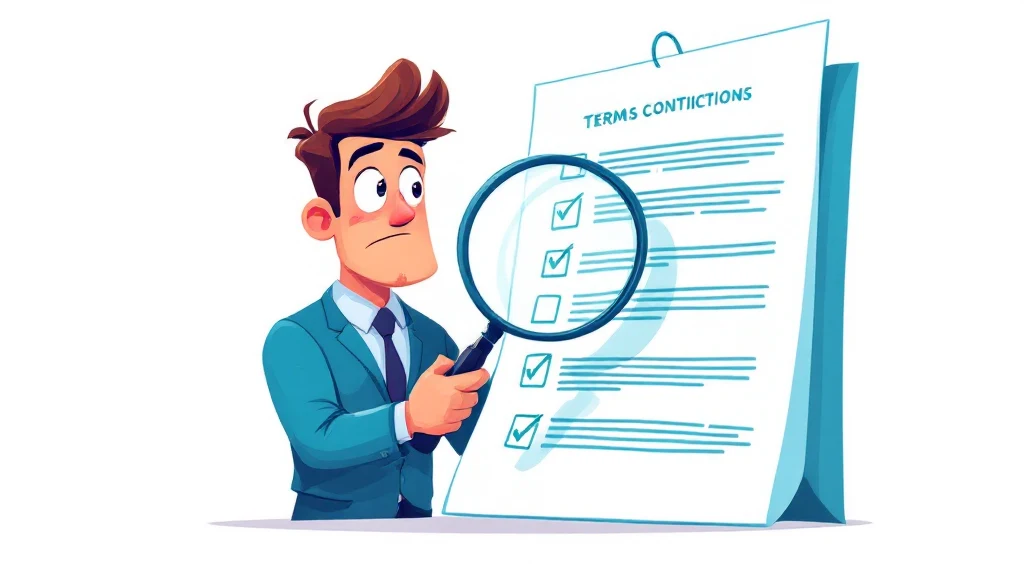
When terms apply appears next to any streaming or IPTV offer, it signals that specific conditions govern what you receive, how you are billed, and what protections you hold as a subscriber. Understanding exactly what terms apply means before you commit to a service can save you from unexpected charges, service limitations, and frustrating cancellation experiences. This guide breaks down seven proven rules every viewer should know before agreeing to any IPTV subscription.
- Terms apply is a legal notice indicating that specific conditions govern a service or offer.
- Reading the full terms before subscribing protects you from hidden fees and restrictive policies.
- Key areas covered by terms include billing cycles, cancellation rights, content availability, and device limits.
- IPTV services such as IPTVCONFIG.COM publish terms that define channel access, EPG, and Catch-Up rights.
- Consumers have legal rights in most jurisdictions that override unfair contract clauses.
- Comparing terms across providers helps you identify the most transparent and subscriber-friendly service.
- Terms apply is never just decorative fine print — it has real legal and financial consequences.
- Always check billing frequency, auto-renewal clauses, and refund eligibility before subscribing.
- Content libraries and channel counts described in marketing may be subject to regional restrictions noted in the terms.
- Device connection limits, simultaneous streams, and fair-use policies are commonly buried in subscription terms.
- A provider that makes its terms easy to read and locate is a strong indicator of trustworthiness.
- Knowing your cancellation rights in advance prevents unexpected charges after you decide to stop a service.
- What Does “Terms Apply” Actually Mean?
- Why Terms Apply Matters More Than Most Subscribers Realize
- Rule 1: Always Identify the Billing Cycle Before You Subscribe
- Rule 2: Understand Auto-Renewal and Cancellation Clauses
- Rule 3: Check Content Availability and Regional Restrictions
- Rule 4: Know the Device and Simultaneous Stream Limits
- Rule 5: Verify Refund and Dispute Resolution Policies
- Rule 6: Understand Fair-Use and Acceptable-Use Policies
- Rule 7: Compare Terms Across Providers Before Committing
- How Terms Apply to IPTV Features Like EPG and Catch-Up TV
- How to Read Terms Apply Notices Without a Legal Background
- Common Mistakes Subscribers Make When Ignoring Terms Apply
- Your Consumer Rights When Terms Apply Seem Unfair
- Frequently Asked Questions
What Does “Terms Apply” Actually Mean?
Terms apply is a shorthand legal notice informing consumers that a full set of conditions governs the advertised offer, product, or service. It is not a decorative phrase — it is a contractual signal that the marketing headline does not tell the complete story.
When you see terms apply next to a promotional price, a channel count, or a free-trial offer, the provider is legally indicating that additional rules exist. Those rules may limit the offer to new subscribers only, restrict it to certain regions, cap the number of devices, or define exactly when and how the price changes after an introductory period.
In the context of IPTV and streaming services, terms apply typically covers several distinct areas simultaneously. These include payment terms, content licensing boundaries, acceptable-use restrictions, and technical service-level commitments. Each of these areas can affect your day-to-day viewing experience in a meaningful way.
Legally, once you click “I agree” or complete a purchase, you are considered to have accepted those terms — even if you never read them. This is why understanding what terms apply means, and then actually reviewing the full document, is one of the most important steps any subscriber can take before handing over payment details.
Reputable providers make their full terms easy to find, written in plain language, and available before the checkout stage. If a provider hides its terms behind multiple clicks or uses language designed to obscure key conditions, that itself is a red flag worth noting before you subscribe.
Why Terms Apply Matters More Than Most Subscribers Realize
Terms apply carries real financial and legal weight that most subscribers underestimate until something goes wrong. A charge that feels unexpected, a channel that suddenly disappears, or a refund request that gets denied — these situations almost always trace back to a clause in the terms the subscriber did not read.
The gap between a marketing headline and the actual service experience is often bridged entirely by the terms. A provider might advertise access to a large number of channels, but the terms may clarify that some channels are only available in specific regions, or that the full library requires a higher-tier plan.
For IPTV services in particular, terms apply governs critical features such as streaming quality, EPG availability, Catch-Up TV access windows, and anti-freeze infrastructure guarantees. Knowing which features are contractually promised and which are offered on a best-effort basis helps you set realistic expectations.
Providers that invest in transparent, subscriber-friendly terms demonstrate accountability. They signal that they stand behind their service rather than relying on buried clauses to avoid responsibility. Choosing a provider whose terms apply documentation is clear and fair is itself a quality indicator.
| Term Area | What It Governs | Why It Matters to You |
|---|---|---|
| Billing Cycle | Monthly, quarterly, or annual payment frequency | Determines how much you pay upfront and how often |
| Auto-Renewal | Whether the subscription renews automatically | Prevents unexpected charges after a trial or plan period |
| Content Availability | Regional restrictions on channels or VOD | Clarifies which content you can actually access |
| Device Limits | Number of simultaneous streams allowed | Affects whether your whole household can watch at once |
| Refund Policy | Conditions under which refunds are granted | Defines your financial protection if the service underperforms |
| Fair-Use Policy | Acceptable usage thresholds and prohibited behaviors | Prevents account suspension for unintended rule violations |
| Cancellation Rights | How and when you can end the subscription | Ensures you know the process before you need it |
Rule 1: Always Identify the Billing Cycle Before You Subscribe
The first rule when terms apply is to locate the exact billing cycle — monthly, quarterly, semi-annual, or annual — before entering any payment information. The billing cycle determines not just how often you are charged, but also how much flexibility you retain if you want to switch plans or cancel.
Monthly billing cycles offer the most flexibility. You can cancel after a single month with minimal financial exposure. Annual plans often come with a lower effective monthly cost, but they require a larger upfront commitment. If the service underperforms, you may be locked in for the remainder of the year without a refund.
When reviewing billing terms, look specifically for:
- The exact charge date each cycle
- Whether the price is locked for the plan duration or subject to change
- How price changes are communicated to subscribers
- Whether a discount applies only to the first billing period
IPTV services that offer multiple billing options give subscribers meaningful control. A provider offering both monthly and longer-term plans acknowledges that different subscribers have different risk tolerances. The ability to start with a shorter cycle before committing to a longer one is a subscriber-friendly practice worth looking for.
Understanding the billing cycle also helps you calculate the true cost of the service over time. A plan that appears affordable at a monthly glance may represent a significant annual commitment. Always calculate the annual total before subscribing, regardless of which billing cycle you choose.
Rule 2: Understand Auto-Renewal and Cancellation Clauses
Auto-renewal clauses are among the most consequential sections where terms apply, and they are frequently the source of subscriber disputes. An auto-renewal clause means the service will automatically charge you for the next billing period unless you actively cancel before the renewal date.
Many providers send a renewal reminder email before the charge, but this is not universally required. Some services renew silently, and subscribers only notice when they see a charge on their bank statement. Reading the auto-renewal clause in advance tells you whether you will receive a reminder, how far in advance you must cancel, and what happens if you cancel after the renewal has already processed.
Cancellation clauses are equally important. They define the exact method of cancellation — whether it must be done through an account dashboard, by email, or by contacting support — and whether any portion of a prepaid period is refundable upon early cancellation. For more background on this subject, see terms of service explained.
Key questions to answer before subscribing:
- Does the service auto-renew by default?
- How many days before renewal must you cancel to avoid the next charge?
- Is cancellation self-service or does it require contacting support?
- Are there any cancellation fees for early termination of a long-term plan?
Providers with straightforward cancellation processes — ideally a single click in an account dashboard — demonstrate respect for subscriber autonomy. Complexity in the cancellation process is a warning sign that the provider may rely on friction to retain subscribers rather than genuine service quality.
Rule 3: Check Content Availability and Regional Restrictions
Content availability is a critical area where terms apply can significantly narrow what you actually receive compared to what is advertised. Content licensing is territorial by nature, meaning a provider may hold rights to broadcast certain channels or films only in specific countries or regions.
For IPTV services with large international channel libraries — including content in dozens of languages from countries across the world — the terms will typically clarify which content is universally available and which is subject to regional access controls. A service advertising channels from many countries may restrict some of those channels to viewers located in the corresponding region.
This is not unique to any single provider; it reflects the reality of how broadcast rights are licensed globally. The important thing is that the terms make this clear, so subscribers can verify whether the specific channels they want are accessible from their location before subscribing.
When reviewing content availability terms, pay attention to:
- Whether channel availability is guaranteed or subject to change without notice
- How the provider handles channels that are temporarily unavailable due to technical or licensing issues
- Whether VOD libraries (movies and TV series) are subject to different regional rules than live channels
- How frequently the content library is updated and whether new additions are communicated to subscribers
A provider that is transparent about regional content boundaries and communicates changes proactively is far easier to work with than one that simply removes content without explanation. Clarity in this area of the terms is a strong indicator of overall service integrity.
Rule 4: Know the Device and Simultaneous Stream Limits
Device and simultaneous stream limits are practical restrictions that terms apply governs, and they directly affect how your household uses the service day to day. Most IPTV subscriptions specify the maximum number of devices that can be registered and the number of streams that can run at the same time.
A single-stream plan means only one screen in your home can be active at any given moment. If two people want to watch different channels simultaneously, you would need a plan that permits two or more concurrent streams. Exceeding the stream limit typically results in one stream being blocked or the account being flagged for review.
Device registration limits are separate from stream limits. Some providers allow you to install the app on many devices but restrict how many can stream simultaneously. Others limit both the number of registered devices and the number of active streams. Understanding which model your chosen provider uses prevents frustrating interruptions.
Practical considerations when reviewing device terms:
- How many devices can be registered on a single account
- Whether changing or replacing a registered device requires contacting support
- Whether smart TVs, mobile phones, and streaming sticks each count separately
- What happens technically when the stream limit is exceeded
For households with multiple viewers and multiple screens, choosing a plan with an appropriate stream allowance from the outset is more cost-effective than upgrading after experiencing interruptions. The terms should make these limits explicit and easy to find before purchase.
Rule 5: Verify Refund and Dispute Resolution Policies
Refund policies are among the most searched sections of any subscription agreement, and they represent a key area where terms apply has direct financial consequences. A clear refund policy tells you under what conditions you can recover your payment if the service does not meet expectations.
Some providers offer a satisfaction guarantee or a short money-back window for new subscribers. Others operate a strict no-refund policy once access has been granted, on the basis that the digital service was delivered. Knowing which policy applies before you subscribe is essential, particularly if you are testing a new provider.
Dispute resolution clauses define what happens if you and the provider disagree about a charge, a service failure, or a cancellation. Some agreements require disputes to be handled through a specific arbitration process rather than through courts. While this is common in many industries, it is worth knowing in advance.
When evaluating refund terms, look for:
- The exact window during which a refund can be requested
- Whether refunds apply to partial billing periods or only full unused periods
- The process for submitting a refund request and the expected response time
- Whether chargebacks through your payment provider are addressed in the terms
A provider with a fair and accessible refund policy signals confidence in its own service quality. Restrictive refund terms are not automatically a dealbreaker, but they do raise the stakes of your initial choice — making it even more important to research the provider thoroughly before subscribing.
Rule 6: Understand Fair-Use and Acceptable-Use Policies
Fair-use and acceptable-use policies are sections of subscription agreements where terms apply defines the boundaries of legitimate subscriber behavior. These clauses exist to protect service infrastructure and ensure equitable access for all subscribers on a shared network.
For IPTV services, acceptable-use policies typically prohibit redistribution of stream credentials, reselling access to third parties, and using automated tools to access content in ways not intended for personal viewing. Violating these policies can result in account suspension or permanent termination without a refund.
Fair-use clauses may also address bandwidth consumption. While most residential subscribers will never approach the thresholds that trigger a fair-use review, subscribers who run streams continuously for extended periods or who share credentials across a large number of users may encounter restrictions.
Understanding acceptable-use terms protects you in two ways. First, it ensures you do not accidentally violate a rule you were unaware of. Second, it clarifies what protections you have if a provider incorrectly flags your account for a policy violation you did not commit.
When reviewing these clauses, confirm:
- Whether sharing your login with family members in the same household is explicitly permitted
- What constitutes prohibited redistribution versus normal personal use
- How the provider investigates and communicates suspected policy violations before taking action
- What the appeals process looks like if your account is suspended in error
Rule 7: Compare Terms Across Providers Before Committing
Comparing terms apply documentation across multiple IPTV providers before committing to one is one of the most effective ways to identify the most subscriber-friendly option. Marketing materials from competing services often look similar, but the terms reveal meaningful differences in how each provider actually treats its subscribers.
Key dimensions to compare include refund windows, cancellation flexibility, content availability transparency, device limits, and the clarity of the language used. A provider whose terms are written in plain, accessible language — rather than dense legal jargon — is signaling that it prioritizes subscriber understanding over contractual obscurity.
Pay particular attention to how each provider handles service outages and technical failures. Some agreements include service credits for extended downtime, while others disclaim all liability for interruptions. This distinction matters if you are paying for a premium service and expect a reliable experience.
How Terms Apply to IPTV Features Like EPG and Catch-Up TV
Terms apply to specific technical features of IPTV services just as much as they apply to billing and cancellation. Features like the Electronic Program Guide (EPG) and Catch-Up TV are often highlighted in marketing but may carry their own conditions within the full terms document.
EPG availability is typically described as included with the subscription, but the terms may clarify that EPG data is provided on a best-effort basis and may not be available for all channels or in all regions. The accuracy and update frequency of EPG data can also vary, and some providers specify that EPG is a supplementary feature rather than a core service guarantee.
Catch-Up TV — the ability to watch previously broadcast content after it has aired — is subject to content licensing restrictions that vary by channel and by country. The terms will typically specify the maximum lookback window (commonly 24 to 72 hours for many channels, though this varies by provider and licensing agreement) and clarify which channels include Catch-Up access and which do not.
For services that include Anti-Freeze Technology, the terms may describe this as an infrastructure optimization rather than an absolute guarantee of uninterrupted playback. Understanding this distinction helps set realistic expectations, particularly during periods of high network demand.
When evaluating IPTV terms related to technical features, look for clarity on:
- Which channels include EPG data and which do not
- The Catch-Up lookback window and whether it applies to all channels or a subset
- How technical features are maintained and updated over time
- Whether feature availability is subject to change with or without advance notice
Services like IPTVCONFIG.COM include EPG and Catch-Up TV as part of their subscription offering, making these features accessible to subscribers as part of the overall package.
How to Read Terms Apply Notices Without a Legal Background
Reading a full terms document without a legal background can feel overwhelming, but a structured approach makes it manageable. The key is knowing which sections to prioritize and which standard clauses are common across virtually all subscription services.
Start with the sections most directly relevant to your financial exposure: billing, auto-renewal, cancellation, and refunds. These four areas have the most immediate impact on your wallet and your ability to exit the service if it does not meet your needs.
Next, review the content and feature availability sections. These tell you what you are actually paying for and under what conditions specific features may be limited or removed. Pay particular attention to any language that says the provider may modify the service or its features at any time.
Practical tips for reading terms efficiently:
- Use your browser’s search function to find keywords like “refund,” “cancel,” “renew,” “device,” and “suspend” quickly
- Look for numbered lists or bullet points — providers that use plain formatting are usually trying to make the terms readable
- Note any clauses that say “at our sole discretion” — these give the provider broad unilateral authority
- Check the effective date of the terms to ensure you are reading the current version
If a specific clause is unclear, contact the provider’s customer support and ask for a plain-language explanation before subscribing. A provider that answers these questions clearly and promptly is demonstrating the kind of transparency that makes for a trustworthy long-term relationship.
Common Mistakes Subscribers Make When Ignoring Terms Apply
Ignoring terms apply notices leads to predictable and avoidable problems. The most common mistake is assuming that the advertised price is the only price — without checking whether it applies only to the first billing period or whether it increases upon renewal.
Another frequent mistake is failing to note the cancellation deadline before an auto-renewal charge. Many subscribers intend to cancel a service but miss the cutoff by a day or two, resulting in a charge for another full billing period. This is preventable by reading the cancellation clause and setting a calendar reminder well in advance of the renewal date.
Subscribers also commonly overlook device and stream limits, discovering only after subscribing that their plan does not support the number of simultaneous viewers in their household. Upgrading to a higher-tier plan after the fact is always more expensive than selecting the right plan from the beginning. For more background on this subject, see consumer protection guidelines.
Additional mistakes to avoid:
- Assuming that all advertised channels are available in your country without checking the regional availability clause
- Sharing login credentials with people outside your household without verifying whether the terms permit this
- Requesting a refund after the refund window has closed and being surprised when it is denied
- Not saving a copy of the terms at the time of subscription, which can be useful if the terms are later updated
Each of these mistakes is easily avoided by spending fifteen to twenty minutes reviewing the key sections of the terms before subscribing. The time investment is small compared to the frustration and financial loss that can result from skipping this step.
Your Consumer Rights When Terms Apply Seem Unfair
Even when terms apply and you have agreed to a contract, consumer protection laws in many jurisdictions provide rights that cannot be waived by a private agreement. Understanding these rights gives you meaningful recourse if a provider’s terms or practices cross legal boundaries.
In many countries, consumer protection regulations require that contract terms be fair, transparent, and not significantly imbalanced against the consumer. Terms that give the provider the right to change the service dramatically without notice, or that completely exclude liability for failures, may be unenforceable under applicable law.
If you believe a charge was made in error or that a service failed to deliver what was promised, you have several avenues available. You can contact the provider’s support team directly, escalate to a complaints department, or — if the provider is unresponsive — contact your payment card issuer to dispute the charge under their buyer protection policies.
Regulatory bodies in various countries also accept complaints about subscription services that engage in unfair practices. Filing a complaint with the relevant consumer authority creates a record and may prompt the provider to resolve your issue more quickly.
Key consumer rights to be aware of:
- The right to receive the service as described at the time of purchase
- The right to clear information about pricing, renewal, and cancellation before agreeing to a contract
- The right to a cooling-off period in many jurisdictions for services purchased online
- The right to dispute unauthorized or incorrect charges through your payment provider
Choosing a provider like IPTVCONFIG.COM, which operates with transparent service terms and a clear commitment to subscriber experience, reduces the likelihood that you will ever need to invoke these rights. Transparency from the outset is always the better path for both subscriber and provider.
Frequently Asked Questions
What does “terms apply” mean on an IPTV subscription offer?
Terms apply is a legal notice indicating that a full set of conditions governs the advertised offer. It means the headline price, channel count, or feature description is subject to additional rules found in the provider’s terms and conditions document. Clicking “I agree” at checkout constitutes legal acceptance of those terms, so reviewing them before subscribing is strongly recommended.
Are terms apply clauses legally binding?
Yes, in most jurisdictions terms apply clauses form a legally binding contract once you accept them during the subscription process. However, consumer protection laws in many countries can override specific clauses that are deemed unfair, excessively one-sided, or that were not clearly communicated before the agreement was made. Always check your local consumer rights framework.
How do terms apply to IPTV channel availability?
Terms apply to channel availability by specifying which channels are accessible in which regions, whether the channel lineup is subject to change, and under what circumstances channels may be temporarily or permanently removed. Content licensing is territorial, so a provider’s terms will typically clarify that some channels may be restricted based on the subscriber’s geographic location.
Can a provider change its terms after I have subscribed?
Most subscription agreements include a clause permitting the provider to update its terms with advance notice — commonly 14 to 30 days. The notice is typically sent by email to the address on your account. If the changes are material and you do not agree with them, you generally have the right to cancel before the new terms take effect, often without penalty.
What should I check in the terms apply document before subscribing to an IPTV service?
Prioritize four sections: billing cycle and pricing, auto-renewal and cancellation policy, content availability and regional restrictions, and device or simultaneous stream limits. These four areas have the most direct impact on your day-to-day experience and your financial exposure. After those, review the refund policy and acceptable-use clauses to understand your protections and obligations.
Do terms apply affect features like Catch-Up TV and EPG?
Yes, terms apply directly to technical features like Catch-Up TV and EPG. The terms will specify the Catch-Up lookback window, which channels include this feature, and whether EPG data is guaranteed or provided on a best-effort basis. Understanding these conditions helps you set realistic expectations about how these features will perform in practice.
What happens if I violate the acceptable-use policy in my IPTV terms?
Violating an acceptable-use policy — such as sharing credentials with people outside your household or redistributing stream access — can result in account suspension or permanent termination, typically without a refund. Most providers will send a warning before taking action, but some reserve the right to terminate immediately for serious violations. Reading the acceptable-use section in advance prevents accidental violations.
How can I cancel an IPTV subscription if terms apply prevent a refund?
Even when terms apply restrict refunds, you can still cancel the subscription to prevent future charges. The cancellation process is defined in the terms — typically through an account dashboard, by email, or via customer support. Cancelling stops the auto-renewal but does not usually recover charges already made. If you believe a charge was made in error, contact your payment card issuer about a dispute.
Is it safe to subscribe to an IPTV service without reading the terms apply document?
Subscribing without reading the terms is financially risky. You may agree to auto-renewal policies, restrictive refund clauses, or device limits that you would have negotiated or avoided if you had reviewed the document first. Spending fifteen minutes reviewing the key sections of the terms — billing, cancellation, refunds, and content availability — is a straightforward way to protect yourself before committing.
How do terms apply differ between short-term and long-term IPTV plans?
Short-term plans typically offer more flexibility with lower financial commitment, while long-term plans often provide a lower effective monthly cost but require a larger upfront payment with stricter refund conditions. Terms apply may specify that long-term plan payments are non-refundable after a short initial window, making it especially important to verify service quality before committing to an extended subscription period.
Understanding what terms apply means — and taking the time to read the full conditions before subscribing — is the single most effective way to protect yourself as an IPTV subscriber. The seven rules covered in this guide give you a practical framework for evaluating any subscription offer with confidence. For a global IPTV service that combines extensive channel coverage, multilingual content, and clear service commitments, explore IPTVCONFIG.COM and review its full terms before subscribing to make an informed decision.